
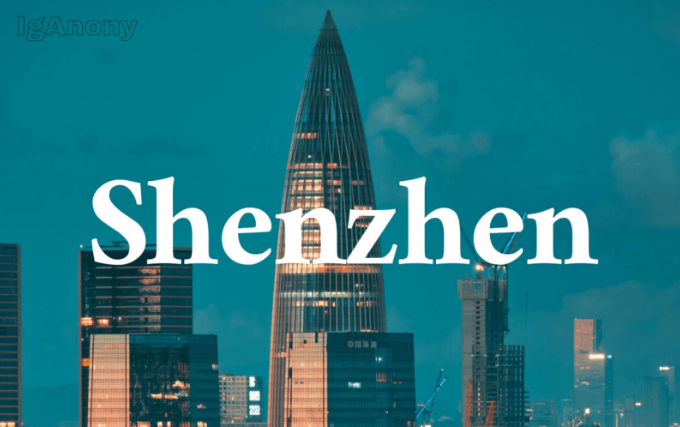
For more than two decades, Shenzhen has stood at the forefront of the world’s LED lighting revolution. Known as the “Silicon Valley of Hardware,” the city’s growth from an electronics hub into a high-tech innovation center has redefined what modern manufacturing means—especially in the LED industry. Today, Shenzhen isn’t just a base for production but a global showcase for engineering-driven, quality-oriented LED manufacturing.
This article explores why Shenzhen has become an irreplaceable part of the global LED supply chain, emphasizing its engineering expertise, advanced design culture, and integration of technology into modern lighting systems.
The Rise of Shenzhen as a Manufacturing Ecosystem
Shenzhen’s transformation from a small fishing town to one of the world’s most advanced manufacturing cities is legendary. Its rapid development began in the late 1980s when it was designated as China’s first Special Economic Zone (SEZ). Over the next three decades, Shenzhen perfected the model of an engineering-driven manufacturing ecosystem, powered by innovation, proximity to suppliers, and deep collaboration among tech companies.
Today, Shenzhen’s manufacturing network covers:
- LED chip encapsulation and testing
- Smart driver R&D and PCB circuitry design
- Optics and diffuser development
- Prototype and precision tooling
- Global certification and export logistics
Unlike traditional industrial clusters focusing purely on low-cost mass production, Shenzhen’s strength lies in integrating engineering research, product development, and intelligent manufacturing into a unified pipeline.
Engineering-Centric LED Manufacturing: What It Means
When we talk about “engineering-focused” LED production, we refer to a systematic approach that combines mechanical design, optical science, and electronic control from the earliest design phase. In Shenzhen factories, every stage—from prototype development to spectral testing—is guided by engineering excellence rather than just assembly speed.
Engineering-driven LED production prioritizes:
- Precision Design: Optimizing circuit layout, heat management, and diode spacing.
- Performance Analysis: Evaluating power efficiency, lumen stability, and voltage drop.
- Reliability Testing: Ensuring long-term durability under thermal and electrical stress.
- Scalability: Enabling quick transitions from small-batch prototyping to full-scale production.
This mindset results in lighting systems that are technologically robust, visually consistent, and tailored to the demands of professional clients.
The Shenzhen Advantage: Why Engineers Thrive Here
Shenzhen’s greatest strength comes from its engineering talent pool and the vast number of research-focused enterprises clustered in the region. Thousands of R&D engineers, product designers, and lighting specialists collaborate to create solutions that meet global standards of performance and reliability.
Key elements behind Shenzhen’s engineering dominance include:
- Industrial Convergence: LED component suppliers, chip manufacturers, optical designers, and packaging experts all operate within a few square miles, enabling rapid technical feedback and supply-chain agility.
- Advanced Infrastructure: The presence of world-class labs, such as the Shenzhen Institute of Advanced Technology, promotes testing precision and industrial prototyping.
- Collaborative Culture: Cross-company cooperation and open innovation ecosystems accelerate problem-solving and product refinement.
- Global Vision: Shenzhen’s manufacturers design with export compliance in mind—meeting UL, CE, and RoHS certifications as standard practice.
These advantages make Shenzhen not just a center for mass production, but a strategic engineering hub for global lighting development.
Integration of Smart Manufacturing
Modern Shenzhen-based factories are defined by digital transformation. The shift to Industry 4.0 and smart factory operations has reimagined how LED lighting systems are built.
Smart manufacturing innovations include:
- Automated Assembly Lines: Precision SMT (Surface Mount Technology) machinery enhances production accuracy and repeatability.
- Data-Driven Quality Tracking: Every batch is digitally traced, from raw materials to packaging, ensuring transparency.
- Real-Time Testing Systems: AI-based inspection tools identify defects and maintain uniform brightness across batches.
- Modular Production Layouts: Facilities can shift between LED strips, modules, or luminaires without major downtime.
Together, these developments shorten lead times, improve efficiency, and guarantee consistency across large-scale orders—key reasons global lighting brands rely on Shenzhen’s engineering leadership.
Materials and Component Excellence
The backbone of Shenzhen’s LED ecosystem lies in its world-class material supply chain. With thousands of component suppliers located nearby, manufacturers have instant access to key elements such as:
- High-grade LED chips from both domestic and global innovators (e.g., Nichia, Cree, Samsung).
- Thermally optimized aluminum PCBs designed for consistent heat management.
- High-transmission optical lenses and diffusers for greater uniformity.
- Efficient power drivers supporting constant voltage and constant current designs.
This decentralized yet synchronized material ecosystem lets engineers experiment, test, and implement the latest technologies without the delays seen in other manufacturing regions.
Global buyers seeking engineering-oriented LED solutions often look to SignliteLED Shenzhen for products that combine component precision with energy-efficient performance.
Prototype to Production: Engineering with Agility
Unlike conventional factories, Shenzhen facilities are structured to support rapid prototyping cycles—a cornerstone of engineering-led production.
Here’s what makes the Shenzhen model unique:
- Short Development Cycles: In-house engineering teams can prototype, test, and modify within days.
- Integrated Testing: Thermal imaging, photometric analysis, and voltage mapping are handled internally.
- Flexible Production Lines: New designs can transition from concept to mass production in as little as 2–3 weeks.
- Iterative Feedback Loops: Engineers and clients collaborate directly during pilot runs to refine performance before full launch.
For clients focused on architectural, commercial, or OEM lighting solutions, this agility drastically reduces time to market and allows faster adaptation to design revisions.
Regulatory Confidence and Global Compliance
Engineering excellence also extends into compliance. Shenzhen-led manufacturers consistently meet or exceed the international standards governing LED lighting systems.
Standard certifications include:
- UL, CE, and CB safety certifications ensuring global compatibility.
- LM-80 and TM-21 lifespan testing validating lumen maintenance.
- IP65–IP68 waterproofing certifications for outdoor durability.
- ANSI C78.377 chromaticity testing confirming color consistency.
Moreover, engineering teams maintain documentation to support export regulations worldwide—allowing distributors and contractors to use Shenzhen-made LEDs confidently in projects requiring certified components.
Advanced Optics and Visual Precision
Optical engineering forms one of Shenzhen’s greatest strengths in the LED sector. Factories routinely employ optical simulation tools to optimize beam angles, reduce glare, and enhance light uniformity across installations.
Key innovations include:
- Micro-lens diffusers that balance efficiency with aesthetics.
- Uniform phosphor coatings improving CRI and color stability.
- Optical-grade silicone encapsulation extending product lifespan and clarity.
- Custom optical profiles for architectural, retail, and industrial lighting.
These optical advancements allow lighting designers worldwide to achieve precise lighting tones and uniform visual effects across expansive architectural environments.
Sustainability and ESG Engineering
Modern LED manufacturing in Shenzhen is no longer just about output volume—it’s about environmental stewardship integrated into engineering practices.
Key sustainable initiatives include:
- Energy-saving manufacturing systems utilizing high-efficiency reflow and curing lines.
- Recyclable materials minimizing waste during PCB processing.
- Green facility certifications (e.g., ISO 14001) that embed sustainability into every engineering stage.
- Supply-chain transparency ensuring ethical sourcing and reduced carbon output.
By merging sustainability with engineering innovation, Shenzhen manufacturers help lighting brands align with ESG goals while maintaining product excellence.
Collaboration Between Industry and Innovation Centers
Shenzhen’s engineering development thrives on collaboration between industry and scientific research institutions. Engineering schools, government labs, and corporate R&D units exchange knowledge on materials science, optoelectronics, and design optimization.
This collaboration supports continuous innovation in:
- Smart lighting protocols such as Zigbee, BLE Mesh, and DALI-2.
- Human-centric lighting research aligning brightness and wavelengths with circadian health.
- AI-based energy analytics for predictive maintenance and efficiency.
Together, these advancements keep Shenzhen manufacturers ahead of global trends, ready to deliver new-generation lighting systems for intelligent cities and large-scale architectural projects.
Competitive Logistics and Export Reliability
With one of the world’s most efficient logistics networks, Shenzhen enables timely delivery for international clients.
- Port Connectivity: Direct access to Yantian and Shekou international ports for global shipping.
- Integrated Customs Facilities: Simplifying export documentation and compliance.
- Smart Warehousing: Real-time digital inventory management ensures product availability.
- Just-in-Time Manufacturing: Custom orders are produced and shipped with minimal delay.
These features make Shenzhen a cornerstone of the global lighting export economy—helping companies reduce turnaround times and achieve consistent product supply worldwide.
For lighting professionals looking for design-grade and export-ready solutions, SignliteLED represents the gold standard in precision manufacturing and project collaboration.
The Future Outlook: Engineering-Driven Growth
As global lighting trends shift toward smart, connected, and sustainable systems, Shenzhen’s role in the engineering chain continues to expand. The city’s focus on automation, data analytics, and innovation ecosystems will accelerate the move toward intelligent and adaptive illumination.
Expect future developments such as:
- 5G-enabled smart lighting control systems linking buildings and infrastructure.
- Quantum-dot LEDs and micro-LEDs enhancing energy performance and color rendering.
- Decentralized manufacturing models leveraging robotic micro-factories for agile production.
- Cross-disciplinary collaboration between material scientists, engineers, and designers to create high-efficiency visual environments.
With its unique combination of talent, technology, and trade connectivity, Shenzhen is poised to lead the next era of engineering excellence in LED lighting.
Final Thoughts
Shenzhen exemplifies how precision engineering transforms manufacturing from a process into an art form. Its unique blend of innovation culture, skilled technical workforce, and integrated infrastructure allows it to set the global benchmark for LED quality and performance.
From conception to export, every LED solution born in Shenzhen reflects a philosophy built on accuracy, efficiency, and forward-thinking design.
For companies seeking to collaborate with trusted engineering partners and achieve world-class lighting solutions, Shenzhen remains the beating heart of LED manufacturing innovation.